
The NC Local Health Department Accreditation Program website is what you might expect – dense with information and intended for a very specific audience. But that didn’t keep the NCLHDA team from finding ways to improve it. I partnered with them to refresh the look and feel, revisit the content navigation and organization, and make it more user-friendly.
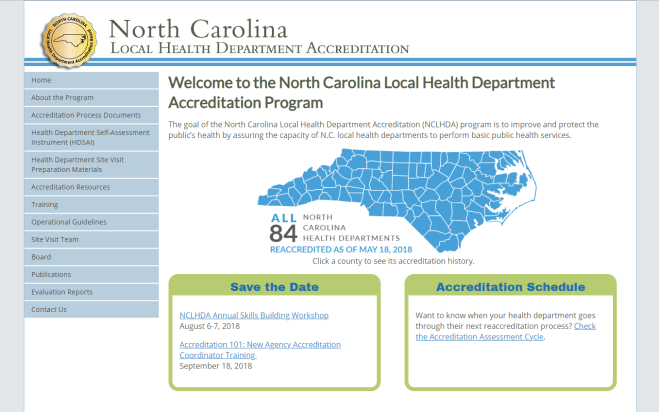
Below is a screenshot from a section of the homepage and highlights from the project. Check out the live site to get the full effect.
UPDATED HOMEPAGE:

ORIGINAL HOMEPAGE:
- Hosting & Platform Considerations: Due to a small budget and limited timeline, we decide to move to WordPress because it’s free and supported by the University, makes it easier to have multiple editors if needed, and offers a variety of modern and responsive templates. It also offers widgets that minimize some of the manual updates required on the existing site, such as an event calendar and blog for news updates.
- Look and Feel: Although the site content requires a lot of text, we chose a clean template with a current and responsive design. We incorporated more visuals and images on the homepage to welcome users and invite them to explore the content.
- Hompeage: We revisited the homepage content to improve the value of the page, adding an intro to explain the purpose of the site, quick links to popular pages, and blog and calendar widgets to highlight what is new.
- Content Review: In our user survey we confirmed that most people use the site to find specific information, resources, and documents for the accreditation process, and that there was room for improvement in organization. We worked from a sitemap to regroup content and update wording to make things easier to find and eliminate duplicate content. We also removed click-thru pages that simply another step for the user to get to what they need.
- Adding Analytics: The prior site did not have Google Analytics set up so we put that in place on the new site so that we have additional insight going forward and can make adjustments based on the actual user behavior.
 Here's The Dill